Ethereum — A Distributed Computer
Section VII: Ethereum Framework
April 9, 2026
Beyond Cryptocurrency: Buterin’s Vision
- By 2013, Bitcoin had shown that a decentralized network could maintain digital money without a central bank, but its scripting model was intentionally narrow and not designed for general applications.
- Vitalik Buterin envisioned something broader: a blockchain that could run arbitrary application logic, so developers would not need to build a new chain for every new use case.

Photo: Romanpoet, Vitalik Buterin Profile Photo, Wikimedia Commons (CC BY-SA 4.0).
- In the whitepaper, Ethereum aimed to provide a general-purpose platform for smart contracts and decentralized applications that could execute the same rules on every node.
- Smart contracts are on-chain programs that can hold value, update state, and enforce rules automatically.
- Deterministic execution across many nodes provides credible neutrality for all of those applications.
Stakeholders & Decision Making
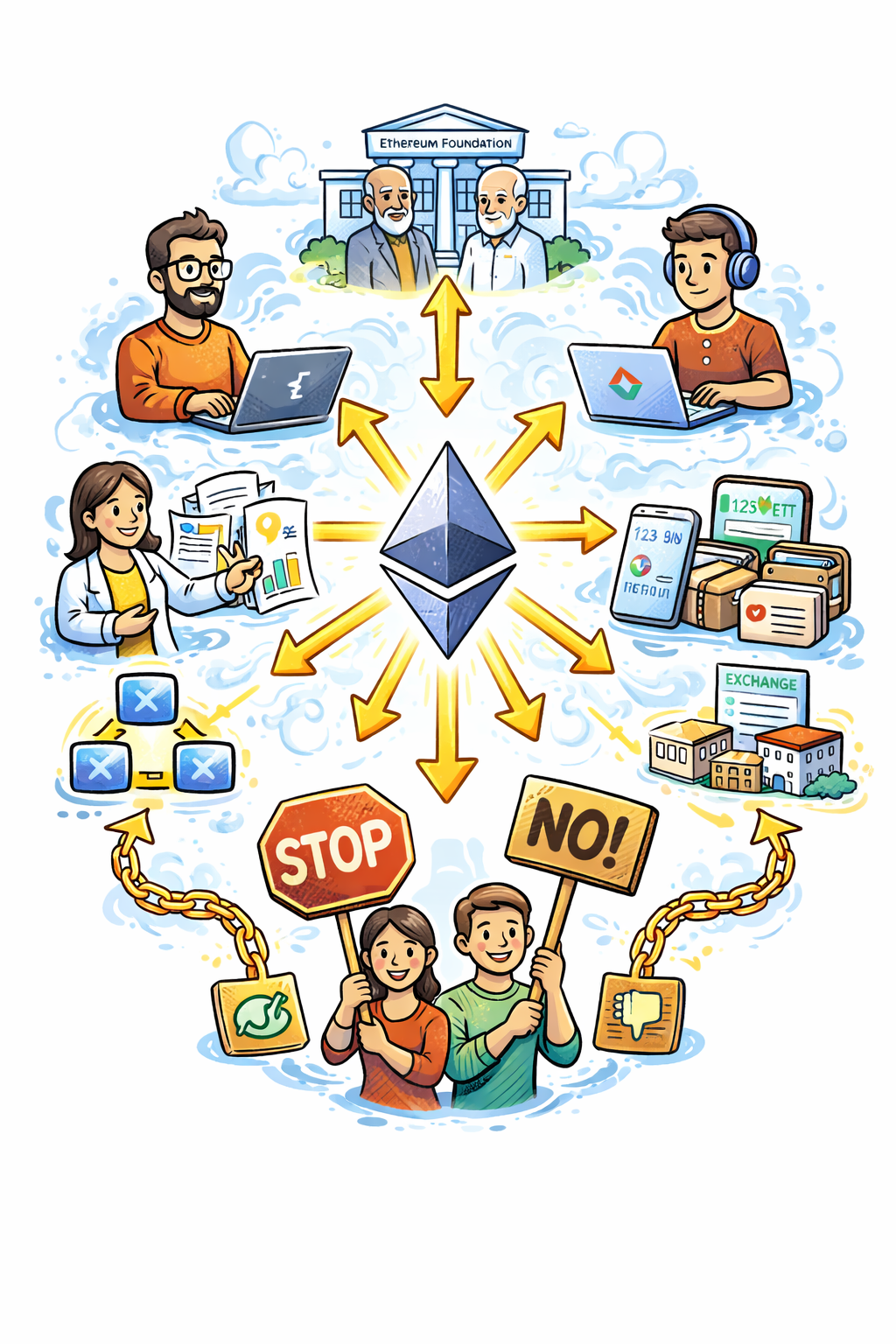
- Client teams implement software and therefore shape what is realistically deployable.
- Researchers and contributors propose designs and analyze security, incentives, and tradeoffs.
- The Ethereum Foundation helps coordinate, but it does not unilaterally command upgrades.
- Validators, node operators, exchanges, wallets, and application teams all matter because they decide what software to run and support.
- In the end, Ethereum governance is opt-in: if enough people disagree, they can refuse an upgrade or follow a different chain.
The Halting Problem
Can an algorithm decide whether any arbitrary program will eventually halt or run forever?
No. In the general case, the problem is undecidable.
“there can be no general process” that decides this for every possible program.
–Alan Turing (1936)
Ethereum wants to run expressive programs, but every node must be able to stop and agree on the result. How can we solve this?
Solution: Gas metering charges for computation and halt execution when prepaid gas runs out.

Oracles: Bridging Blockchains and Reality

- Problem: Smart contracts cannot directly observe off-chain facts such as prices, weather, or election outcomes.
- Oracle: an external system that brings outside data on-chain so contracts can use it in their logic.
- Common models: a single trusted data source, or a decentralized oracle network that aggregates multiple sources.
- Trade-off: oracles solve the information gap, but they add new trust assumptions around data quality, honesty, and liveness.
Impact of The Merge
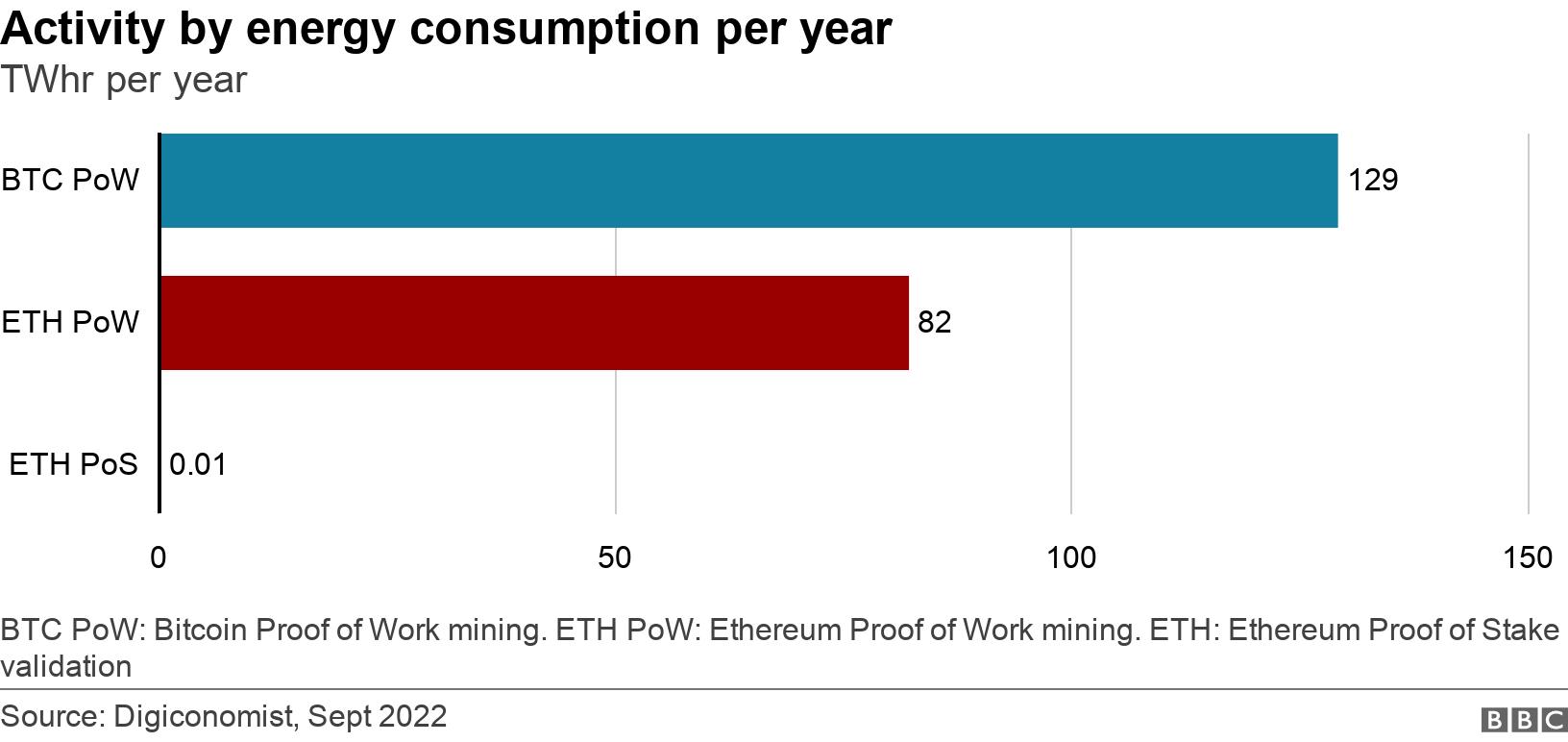
Chart: BBC News, Joe Tidy, Ethereum Merge: How One Big Cryptocurrency Is Going Green (Sept. 14, 2022).
- ~99.9% reduction in energy use, because mining hardware no longer secures the network.
- ETH issuance fell relative to the PoW era, while EIP-1559 base-fee burn continued.
- Supply dynamics shifted away from heavy issuance and toward network activity.
- Some mining hardware moved to other PoW chains after Ethereum stopped mining, changing the economics and security mix of those networks.
- Users and applications continued through the transition without restarting the chain, which showed that Ethereum could change its consensus system without wiping balances or contracts.
- The Merge set up Ethereum’s next phase by letting the roadmap focus on rollups and data availability instead of maintaining a mining-based base layer.